





Interstellar
HeartGuard score
How suitable a title is for Christian viewers, from 0 to 100. It weighs the content meters and the worldview.
- 80–100Recommended
- 60–79Good overallThis film
- 35–59Think it through
- 15–34Strong caution
- 0–14Not recommended
HeartGuard score
How suitable a title is for Christian viewers, from 0 to 100. It weighs the content meters and the worldview.
- 80–100Recommended
- 60–79Good overallThis film
- 35–59Think it through
- 15–34Strong caution
- 0–14Not recommended
Worldview score
What the story celebrates or condemns.
Why +1 for this film
The story honours self-sacrifice, courage, honesty and a parent's love, and shows deception and self-preservation at others' cost as destructive. God is largely absent, with hope placed in human ingenuity and love, so it sits at positive values rather than faith.
- +2Affirms faithPresents faith in God positively and as true
- +1Positive valuesThis filmHonesty, sacrifice and family win out
- 0Mixed or neutralNo clear stance
- −1AmbivalentShows sin without judging it either way
- −2Glamorises sinMakes sin look attractive and rewarding
Age guide
How suitable this film is for each age group.
Why 12+ for this film
Sustained peril, several bloodless but distressing deaths, one strong word and heavy themes of family separation and grief set the age; the long, complex story also suits older viewers.
- Under 8No
- Ages 8–12With a parent
- Ages 13–15Yes
- Ages 16–17Yes
- AdultsYes





An ambitious, emotional space epic about a father leaving his children to find humanity a new home. Language is light, but intense peril, several deaths and heavy themes of loss make it demanding viewing.
Watch guide
What's in it?
LanguageOne f-word, some mild
Profanity is sparse: a single f-word in a tense confrontation, plus several uses of words such as s-word, b-word, damn and hell.
BlasphemyA few exclamations
God's and Jesus' names are used as exclamations a handful of times.
Sex and nudityBrief kisses only
There are no sex scenes or nudity; the romantic content is limited to a couple of brief kisses.
RelationshipsFamily strain
A widowed father leaves his children for a dangerous mission, and his daughter's anger leads to a long estrangement. Family love is central and treated tenderly.
ViolenceDeaths, largely bloodless
Characters die in a tidal wave, an explosion and a struggle in which one man cracks another's helmet and leaves him to suffocate. A body is seen floating; violence is bloodless and mostly not lingered on.
Frightening scenesIntense peril in space
Choking dust storms, a towering tidal wave, spacecraft failures, explosions and a fall into a black hole create long stretches of tension, with loud sound and grief that may overwhelm younger children.
Drugs and alcoholBeer on the porch
Cooper and his father-in-law share beers in casual scenes at home. No drug use or smoking.
AttitudesLies, exposed
A scientist deceives the public and his own team for years, and an astronaut falsifies data and tries to kill to save himself. Both deceptions are shown as damaging and are exposed.
OccultGhost idea, explained
A child believes a ghost is moving things in her room; the film gives it a scientific explanation rather than a supernatural one.
- To knowContent to know about
- Skip for kidsSkip for younger viewers
- DiscussWorth discussing
- Early
Alcohol and a ghost idea
Cooper and his father-in-law share beers on the porch. Cooper tells his young daughter a half-truth about a household saying, and she believes a ghost moves things in her room.
- Early
Family separation
Cooper leaves his children to fly the mission. His daughter refuses to say goodbye and is left angry and tearful.
- Mid
Peril and death
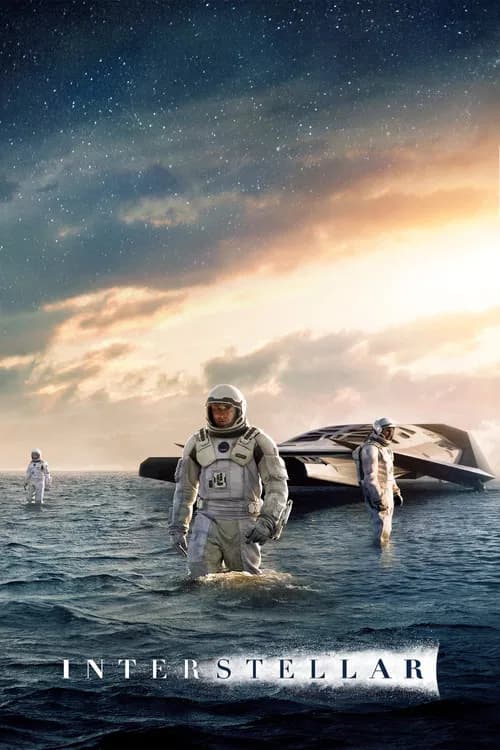
On a water planet, a towering tidal wave sweeps over the crew and one astronaut is killed. His body is seen floating, with no blood.
- Mid
Grief and loss
Cooper watches years of video messages from his grown children and breaks down in tears, as one family loss is shown.
- Mid
Violence and betrayalSkip if under 11
On an icy planet, an astronaut cracks Cooper's helmet and leaves him to suffocate. He has lied to lure the crew there. A booby trap and a docking accident follow, with explosions and further deaths, bloodless but tense.
- Mid
Lying
A scientist's long deception of the public and his own crew is exposed.
- Mid
Strong language
The strongest language comes in a heated confrontation, including one f-word. Milder swearing and a few uses of God's and Jesus' names as exclamations appear throughout.
- Late
Emotional ending
The film's last stretch is loud and emotionally heavy, with intense peril and a deeply moving family reunion that many viewers find upsetting.






How to play
- 1. Draw a cardOne person reads the question out loud.
- 2. Everyone answersThere are no wrong answers. Listen before you reply.
- 3. Pass it onThe next person draws, until the deck is done.



Faith & story
What does it say?
What's it about?The plot, without the ending

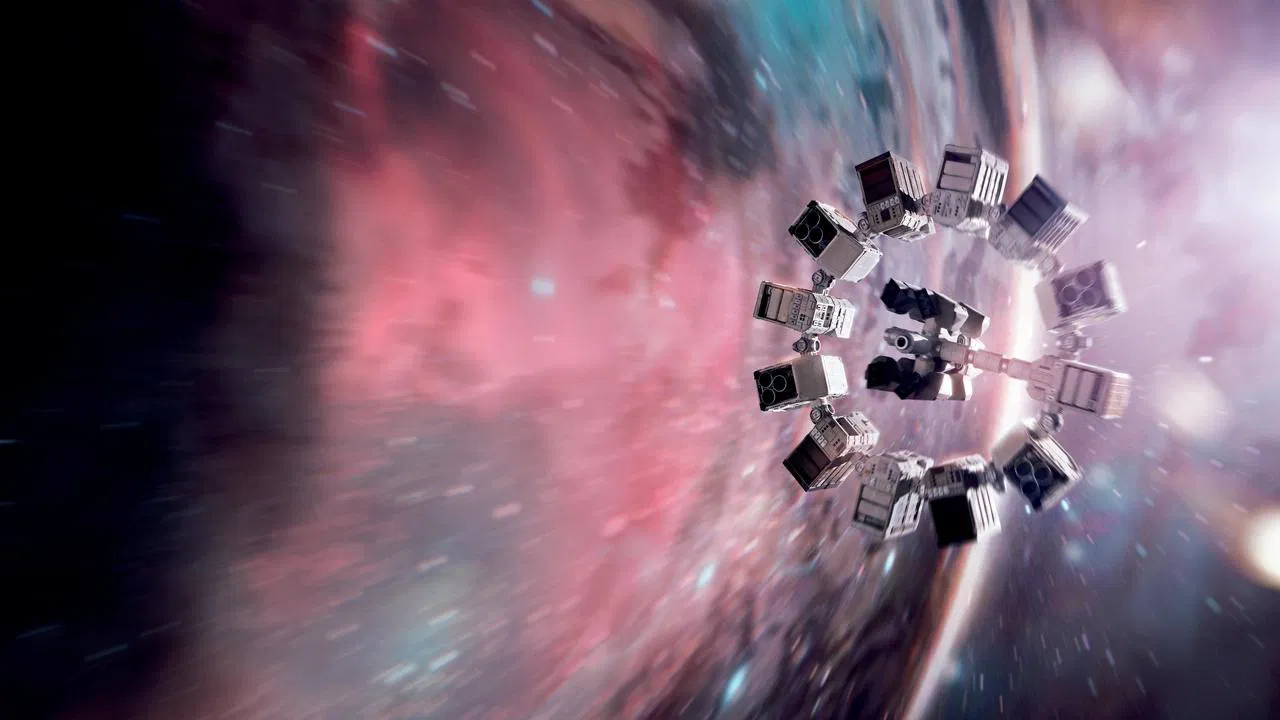
In a near future where crop blights and dust storms are slowly ending life on Earth, widowed farmer and former NASA pilot Cooper raises his son Tom and daughter Murph with his father-in-law. A strange pattern of dust in Murph's room leads Cooper to a hidden NASA base. There, scientists are preparing a last-chance mission through a wormhole near Saturn to search for a new home for humanity. Cooper must choose between staying with his children and joining the crew. The journey tests the crew's courage, honesty and trust, and the cost of time and distance on a family.
Through a faith lensHow it connects to the Bible

Interstellar is a story about a father's sacrificial love, and it echoes the Bible's picture of love that gives itself for others. Cooper leaves his children so that others may live, which reflects the greatest love of laying down one's life for friends. Murph waits through decades of silence and grief, and her faithfulness recalls the long waiting of those who hoped for a promise they could not yet see. Professor Brand's lie, believing a hidden truth would keep people hopeful, and Mann's falsified data, told to save himself, show how deceit damages those who trust. Both are exposed as costly. Mann's fear of dying alone drives him to harm others, a picture of self-preservation overriding love. God is not named or worshipped in the film, and its hope rests in human ingenuity and love, yet its claim that love reaches across time and space invites a conversation about where love comes from. Families can talk about whether human effort alone can save us.
Fruit of the SpiritWhich fruit does it show?

6 out of 9 fruits ripe in this film
Ripe grapes are shown in the film, buds are missing
- Joy
- Kindness
- Gentleness
Love is the film's centre: Cooper's devotion to Murph and Tom drives his choices, and Brand speaks of love as something that reaches beyond what can be measured. Faithfulness shows in Murph, who spends her life working to finish her father's unfinished task, and in Cooper keeping his promise to return. Patience appears in Murph's decades of work and in Brand's steady endurance on the mission. Goodness shows in Cooper and Brand risking themselves for the crew and for people they will never meet. Self-control shows when Cooper stays calm to regain control of the damaged craft in a crisis. Peace is seen when father and daughter finally reconcile. Hatred and envy surface in Mann, who lies and tries to kill to save himself, and in Murph's bitter anger at her father's departure.
The charactersExamples to follow or avoid







 CooperMatthew McConaughey
A widowed farmer and ex-pilot who loves his children deeply. He takes the mission to give them a future, and carries the pain of leaving them.
 BrandAnne Hathaway
A scientist on the crew and the professor's daughter. She is brave and compassionate, and argues that love may matter as much as reason.
 Professor BrandMichael Caine
The veteran scientist leading the programme. He believes he is serving humanity, but his methods rely on secrecy and deception.
 MurphJessica Chastain
Cooper's curious, stubborn daughter. Hurt by his leaving, she grows into a scientist working to solve the problem that could save people.
 MannMatt Damon
A celebrated astronaut met on a distant planet. Fear and the wish to survive lead him to betray others.
 TARSBill Irwin
A blunt, witty robot crew member with adjustable honesty and humour settings. He proves loyal and dependable.
How Christians are portrayed
Christians and the church do not appear as such. Faith is almost absent, though a few characters mention prayer or biblical figures in passing, and the film's tone is humanist rather than mocking toward belief.
Community
What other Christians think
What did you notice?
Strong language (the f-word or similar)?
Is this appropriate for Christians to watch?
Thinking of children? Add the youngest age you'd show it to.
Review
Helpful reviewer
The star beside a name
Given to members whose reviews 25 or more people have marked Helpful.
It rewards reviews that help other families decide, not how many someone writes. It's a sign others have found their reviews thoughtful, not a verdict on anyone's faith.
Found a review useful? Mark it Helpful: it tells the writer, and helps others find the best reviews first.
Details
Film details
- In theatres
- Nov 4, 2014
- On streaming
- Mar 31, 2015
- Cast
- Matthew McConaughey, Anne Hathaway, Michael Caine, Jessica Chastain
- Director
- Christopher Nolan
- Studios
- Legendary Pictures, Syncopy, Lynda Obst Productions
- Genre
- Adventure, Drama, Science Fiction
- Run time
- 2h 49m
- Age rating
- US PG-13 · UK 12A
How we analysed this
We gathered the plot and reception, and facts that independent sources agree on, then rated each content area against our rubric and worldview scale, using AI models calibrated on reference titles. Not yet reviewed by our team. Confidence: medium.
Score = 100 − 16 × content concern (2.35) + 8 × worldview (+1) = 70
Updated 2026-10-14