




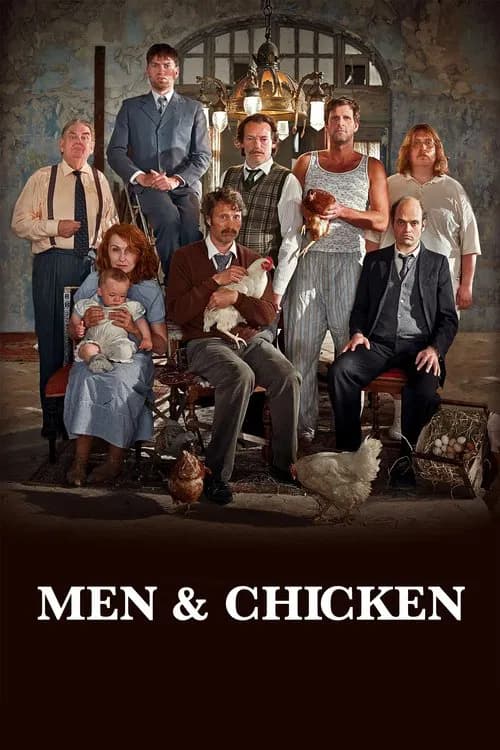
Men & Chicken
HeartGuard score
How suitable a title is for Christian viewers, from 0 to 100. It weighs the content meters and the worldview.
- 80–100Recommended
- 60–79Watch with care
- 35–59Think it throughThis film
- 15–34Strong caution
- 0–14Not recommended
HeartGuard score
How suitable a title is for Christian viewers, from 0 to 100. It weighs the content meters and the worldview.
- 80–100Recommended
- 60–79Watch with care
- 35–59Think it throughThis film
- 15–34Strong caution
- 0–14Not recommended
Worldview score
What the story celebrates or condemns.
Why 0 for this film
The film mocks Scripture and plays bestiality and cruelty for laughs. Yet its arc moves towards brotherly reconciliation, apology and an affirmation that every life, however broken, is worth living, which leaves it mixed overall.
- +2Affirms faithPresents faith in God positively and as true
- +1Positive valuesHonesty, sacrifice and family win out
- 0Mixed or neutralThis filmNo clear stance
- −1AmbivalentShows sin without judging it either way
- −2Glamorises sinMakes sin look attractive and rewarding
Age guide
How suitable this film is for each age group.
Why 16+ for this film
Crude sexual content, including strongly implied bestiality and a running masturbation gag, plus about eight f-words, frequent slapstick violence and grotesque, macabre imagery.
- Under 8No
- Ages 8–12No
- Ages 13–15Wait
- Ages 16–17Check first
- AdultsCheck first





A grotesque Danish black comedy about misfit brothers who discover their monstrous origins and learn to belong to each other. It has a surprisingly tender heart but crude sexual implications, macabre imagery and mockery of the Bible.
Watch guide
What's in it?
Language8 f-words, regular cursing
There are around eight f-words, a handful of other swear words and frequent 'what the hell'. Most of it comes from the foul-mouthed mayor and the brothers' outbursts. Insults about appearance are also common.
BlasphemyA few exclamations
God's or Christ's name is used as an exclamation three times. The brothers also mock the Bible as silly when it is read aloud, but that falls under spiritual content.
Sex and nudityCrude, implied bestiality
It is strongly implied that the reclusive brothers use chickens sexually 'for practice', and Elias's frequent trips to the toilet are a running masturbation gag. There is crude innuendo about women, a joke about penis size, and a described dream involving rape of a bird. Little or nothing is shown explicitly, but the subject matter is grotesque.
RelationshipsCrude pursuit, grim backstory
Elias harasses women with lewd remarks, and the brothers go 'hunting' for women in a care home. The father is revealed to have used his wives as experimental subjects, and they died in childbirth. Gabriel's own romantic life has been sabotaged by his brother.
ViolenceSlapstick brutality
The brothers settle disputes by beating each other with stuffed animals, frying pans and rolling pins, and there are bites, a bloody nose and a man knocked unconscious. Off screen, a nursery worker injures a small child and a woman is left with a concussion. The violence is played as absurd comedy, but it is frequent and sometimes bloody.
Frightening scenesGrotesque discoveries
A decaying corpse is left in an upstairs room, and the basement holds deformed hybrid animal specimens and the preserved remains of the brothers' mothers. Hybrid chickens with hooves and a stork with human feet add to the macabre tone. These moments would disturb children.
Drugs and alcoholNone significant
No drug use is evident from the dialogue. The 'smoking' references are an idiom for being sent to the cage.
AttitudesDysfunction, slowly challenged
Lying, bullying, cruelty about appearance, harassment of women and threats to a nursery head are all played for laughs. Gabriel's wounding words to Elias are later apologised for, and the film moves towards forgiveness and acceptance.
OccultNone
There is no witchcraft, magic, fortune-telling or contact with the dead. The film's strangeness comes from a mad geneticist's experiments, which are science fiction rather than the occult.
- To knowContent to know about
- Skip for kidsSkip for younger viewers
- DiscussWorth discussing
- 0:03
Sexual content
Elias describes a recurring dream to a date that involves breaking a bird's wings and sexually assaulting it.
- 0:35
Implied bestialitySkip if under 16
In the henhouse, Gregor lets slip that the brothers use the chickens sexually while they wait to meet women.
- 0:38
Violence
A row over who gets the dog plate at dinner turns into a biting brawl between the brothers.
- 0:42
Disturbing imagery
Gabriel and Elias break into the upstairs room and find that their father has been dead for some time.
- 0:58
Mockery of Scripture
The brothers read the story of Abraham and Isaac, recast it as mental illness and call the Bible silly, while Gabriel defends the miracle of Isaac's birth.
- 1:06
Family conflict
Gabriel tells Elias that he hates him, calls him ugly and disgusting, and says he has ruined his life.
- 1:26
Macabre imagerySkip if under 15
In the basement the brothers find disturbing preserved remains and learn the truth about their origins.
- 1:30
Reconciliation
Gabriel and Elias apologise to each other, admit their faults and embrace.







How to play
- 1. Draw a cardOne person reads the question out loud.
- 2. Everyone answersThere are no wrong answers. Listen before you reply.
- 3. Pass it onThe next person draws, until the deck is done.



Faith & story
What does it say?
What's it about?The plot, without the ending

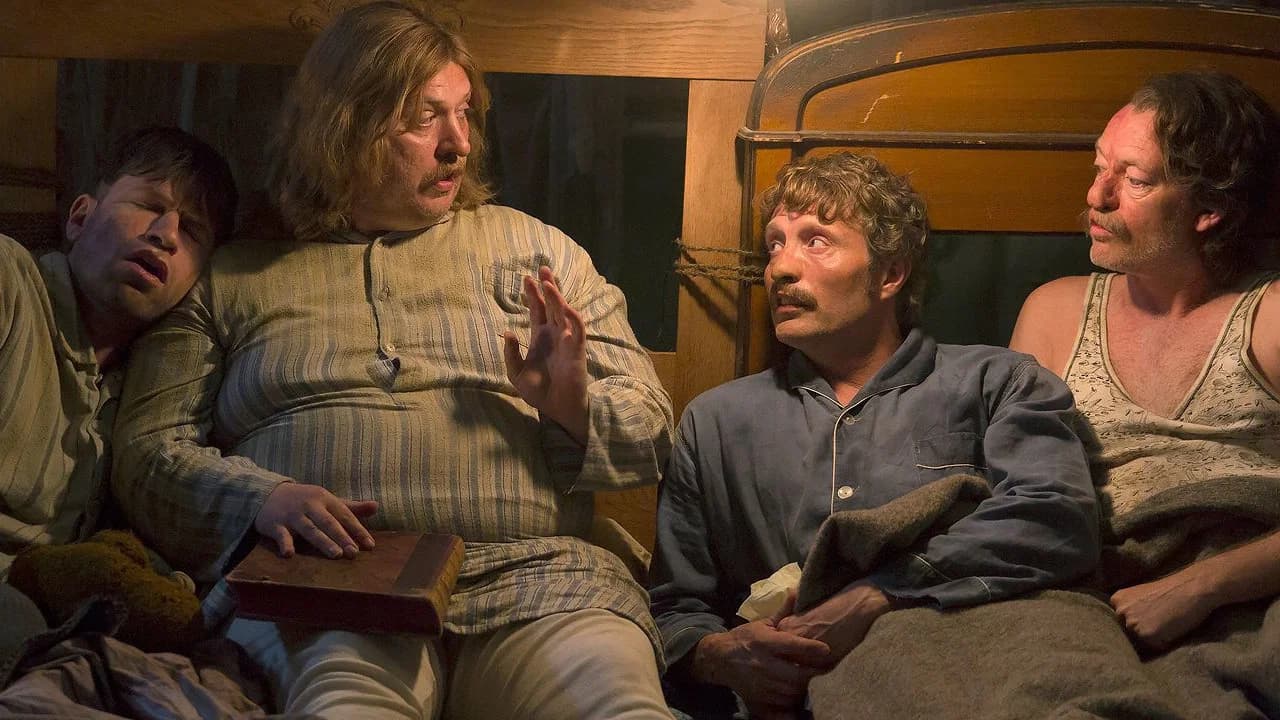
When their adoptive father dies, two very different half-brothers learn from a videotape that their real father is a reclusive geneticist living on a tiny, dwindling Danish island. Gabriel, a fussy academic, and Elias, a crude and impulsive womaniser, go in search of him. In a crumbling former sanatorium full of animals they find three more half-brothers who settle every argument with violence and live by strange house rules. As Gabriel tries to bring order, hygiene and conversation to the household, the brothers' unsettling family history begins to come out. The film is a dark Danish comedy about misfits, belonging and what it means to be family.
Through a faith lensHow it connects to the Bible

Evelio's basement shows what happens when a man tries to overrule the order in which God made each creature according to its kind. His sons are treated as failed experiments, while Scripture holds that every human being bears God's image whatever their appearance or origin. The film touches on the psalmist's wonder that each person is fearfully and wonderfully made, though it never names a Maker. When the brothers scoff at Sarah bearing a child in old age, they echo her own laughter, which God answered by asking whether anything is too hard for the Lord. Gabriel's outburst in the cage shows how one tongue can bless and curse, and how cursing cuts against people made in God's likeness. The brothers' halting apology and embrace point to the forgiveness Christians are asked to show one another. Their eventual unity, odd as it is, hints at how good it is when brothers live together in peace.
Fruit of the SpiritWhich fruit does it show?

3 out of 9 fruits ripe in this film
Ripe grapes are shown in the film, buds are missing
- Joy
- Goodness
For much of the film the brothers lack self-control and gentleness: they hit, bite and insult one another, and peace in the house is kept only by threat. Yet some fruit grows. Elias is loyal to Gabriel to the point of clinging, and he stands up for Franz at the nursery, however clumsily. Gabriel shows patience in trying to teach his brothers to talk rather than fight. Kindness appears when Gabriel gently tends Elias after a fall, and when Franz shares his food with the animals. In the end both choose love and faithfulness by coming back to each other and asking forgiveness.
The charactersExamples to follow or avoid






 EliasMads Mikkelsen
An impulsive, crude older brother with a constant urge for the toilet and for women. Under the bluster he is fiercely loyal and desperate to belong.
 GabrielDavid Dencik
A pedantic philosophy lecturer who wants answers about his origins. He tries to civilise his brothers but wounds Elias badly before learning humility.
 GregorNikolaj Lie Kaas
A brother who longs to meet women and is quick to fight. He is the one who first helps Gabriel uncover the truth.
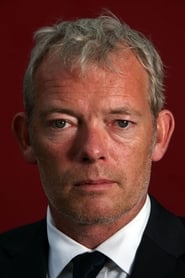 FranzSøren Malling
The self-appointed head of the household, who enforces rules with violence and refuses outside ideas, including the Bible.
 JosefNicolas Bro
The gentlest brother. He loves storytime and reads Scripture through a dry scientific lens, often with comic effect.
How Christians are portrayed
No Christians appear as characters, and the island's church is said to have burned down years ago. The Bible arrives as a borrowed book that Gabriel, himself an unbeliever, offers as a guide to behaviour, and the brothers mostly ridicule it, though Gabriel defends the story of Isaac's birth as God hearing a prayer. The adoptive father's taped farewell speaks sincerely of going home to God, and this is the film's only straightforward expression of faith.
Community
What other Christians think
What did you notice?
A sex scene, shown or clearly implied?
Is this appropriate for Christians to watch?
Thinking of children? Add the youngest age you'd show it to.
Review
Helpful reviewer
The star beside a name
Given to members whose reviews 25 or more people have marked Helpful.
It rewards reviews that help other families decide, not how many someone writes. It's a sign others have found their reviews thoughtful, not a verdict on anyone's faith.
Found a review useful? Mark it Helpful: it tells the writer, and helps others find the best reviews first.
Details
Film details
- In theatres
- Oct 9, 2015
- On streaming
- Jul 2, 2015
- Cast
- Mads Mikkelsen, David Dencik, Nikolaj Lie Kaas, Søren Malling
- Director
- Anders Thomas Jensen
- Studios
- M&M Productions, DCM Pictures, DR
- Genre
- Comedy, Drama
- Run time
- 1h 44m
- Age rating
- CH 12
How we analysed this
We counted language, blasphemy and other content in the film's dialogue and read it with the plot and film details, then rated each content area against our rubric and worldview scale, using AI models calibrated on reference titles. Not yet reviewed by our team. Confidence: medium.
Score = 100 − 16 × content concern (2.61) + 8 × worldview (0) = 58
This is a guide to help families choose with wisdom, not a verdict on anyone's conscience ().
Updated 2026-10-14