





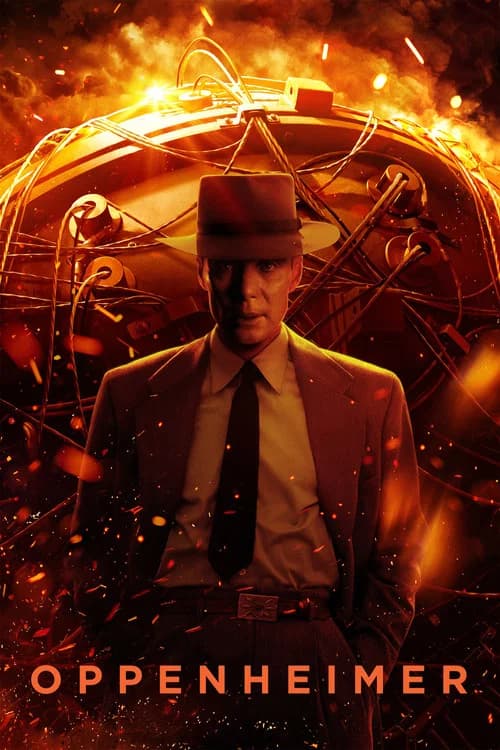
Oppenheimer
HeartGuard score
How suitable a title is for Christian viewers, from 0 to 100. It weighs the content meters and the worldview.
- 80–100Recommended
- 60–79Watch with care
- 35–59Think it throughThis film
- 15–34Strong caution
- 0–14Not recommended
HeartGuard score
How suitable a title is for Christian viewers, from 0 to 100. It weighs the content meters and the worldview.
- 80–100Recommended
- 60–79Watch with care
- 35–59Think it throughThis film
- 15–34Strong caution
- 0–14Not recommended
Worldview score
What the story celebrates or condemns.
Why 0 for this film
The film takes seriously the moral weight of creating a weapon of mass destruction and shows the costs of pride, deceit and infidelity, but it offers no clear redemption or faith, leaving its hero and his guilt unresolved in a morally grey world.
- +2Affirms faithPresents faith in God positively and as true
- +1Positive valuesHonesty, sacrifice and family win out
- 0Mixed or neutralThis filmNo clear stance
- −1AmbivalentShows sin without judging it either way
- −2Glamorises sinMakes sin look attractive and rewarding
Age guide
How suitable this film is for each age group.
Why 16+ for this film
Two sex scenes with nudity, an affair, and repeated strong language including f-words drive the rating. Brief disturbing visions and a death by overdose add intensity within a bleak, tense mood.
- Under 8No
- Ages 8–12No
- Ages 13–15Wait
- Ages 16–17Check first
- AdultsCheck first





A gripping, morally searching portrait of the man behind the atomic bomb, marked by guilt, ambition and political betrayal. Expect strong language, two sex scenes with nudity, an affair, heavy smoking and drinking, and disturbing visions.
Watch guide
What's in it?
LanguageStrong language
Profanity runs through the film, including f-words and milder swearing, often in heated political and personal arguments.
BlasphemySome exclamations
Expect occasional exclamatory uses of God's name in tense or angry moments.
Sex and nuditySex scenes, nudity
Two sex scenes show female breasts and buttocks and male buttocks. In one sequence a woman sits fully nude talking with Oppenheimer, and in a hearing scene he is imagined naked before his questioners while his wife watches.
RelationshipsAdultery shown
Oppenheimer continues an affair with a former lover while married, and it is later exposed in a hearing, causing his wife shame and anger. His marriage begins with an affair with a married woman and is shown as strained.
ViolenceBrief disturbing images
The atomic test is shown as a huge, loud explosion. Brief imagined visions show a woman's skin peeling and a charred body, and the bombing of Japan is discussed rather than shown.
Frightening scenesDisturbing visions
Oppenheimer's guilt-ridden visions of blinding light, weeping and burned people are unsettling, and the film has a tense, oppressive mood throughout. A woman's death in a bathtub is shown briefly.
Drugs and alcoholHeavy drinking, smoking
Nearly constant smoking and frequent drinking, with Kitty shown struggling with alcohol. A woman dies after an overdose.
AttitudesDeceit and betrayal
Oppenheimer lies to security officials, and a political rival schemes against him through a rigged hearing, with surveillance and wiretapping. Early on he poisons an apple to harm a tutor before thinking better of it. The film weighs these choices seriously rather than celebrating them.
OccultHindu scripture quoted
Oppenheimer quotes the Bhagavad Gita, once during a sex scene, as a literary and moral reference rather than practised religion. A John Donne poem about God inspires the test's name.
- To knowContent to know about
- Skip for kidsSkip for younger viewers
- DiscussWorth discussing
- Early
Attempted harm
A young Oppenheimer, unhappy at Cambridge, injects an apple with poison meant for his tutor, then has second thoughts.
- Early
Sexual content, nuditySkip if under 16
Oppenheimer and Jean Tatlock have sex, with female and male nudity. He is married to Kitty by the time of the later relationship, and the Bhagavad Gita is quoted during one scene.
- Early
Suicide, overdose
Jean Tatlock is found dead in a bathtub after an overdose, shown briefly in cut shots that hint she may have been killed.
- Mid
Alcohol and smoking
Heavy drinking and near-constant smoking run through the Los Alamos years, and Kitty is shown struggling with alcohol.
- Mid
Moral weight, Hindu scripture
The Trinity test: a huge, loud explosion with a delayed shockwave. Oppenheimer's name for it draws on a John Donne poem and he quotes the Gita afterwards.
- Mid
Disturbing imagerySkip if under 13
At a celebration, Oppenheimer has visions of blinding light, a woman's skin peeling from her face and a charred body. The bombings are discussed, not shown.
- Late
Nudity, adulterySkip if under 16
At the hearing, his affair is raised and he is imagined nude in front of his questioners while Kitty watches. Her shame and anger are plain.
- Late
Deceit and betrayal
Officials scheme to discredit Oppenheimer, using wiretaps and a one-sided hearing, with lying and betrayal on several sides.
- Late
Sombre ending
The film closes on a bleak, unsettling note, with imagined scenes of nuclear destruction that many viewers find haunting.







How to play
- 1. Draw a cardOne person reads the question out loud.
- 2. Everyone answersThere are no wrong answers. Listen before you reply.
- 3. Pass it onThe next person draws, until the deck is done.


Faith & story
What does it say?
What's it about?The plot, without the ending

J. Robert Oppenheimer is a brilliant young physicist who studies in Europe and returns to teach in America in the 1930s. As war spreads, the US government recruits him to lead a secret effort to build an atomic weapon before Nazi Germany can. He gathers the finest scientists to a remote laboratory in New Mexico and races against time. Years later, his role in the project, his past political friendships and his rivalries come under hostile scrutiny. The film moves between these timelines, asking what he created, what it cost and who must answer for it.
Through a faith lensHow it connects to the Bible

This is a story about knowledge and power pursued without wisdom, and about what follows. Oppenheimer's brilliance builds a weapon that can end the world, and his later remorse is met with irritation rather than comfort. Scripture warns that knowledge puffs up while love builds up. The tower of Babel mirrors the film's ambition: a generation reaching for greatness and unable to control what it makes. Oppenheimer's guilt is real, yet the film offers him no one to carry it, and it shows how much easier it is to feel remorse than to repent. David's adultery and the cover-up that followed show how private sin spreads into public ruin, as it does in Oppenheimer's affair and his lies to officials. Strauss's vendetta shows what envy does to a man who cannot bear to be overshadowed. The film's consequences are plain, though forgiveness is not on offer. Christians may see a longing for what only Christ gives: a conscience cleansed and a burden taken.
Fruit of the SpiritWhich fruit does it show?

2 out of 9 fruits ripe in this film
Ripe grapes are shown in the film, buds are missing
- Love
- Joy
- Peace
- Patience
- Kindness
- Gentleness
Faithfulness appears in Groves, who stands by Oppenheimer at the hearing, and in Kitty, who defends her husband under hostile questioning despite her hurt. Goodness is shown in David Hill, who tells the truth at real cost to himself. The works of the flesh dominate. Sexual immorality and impurity run through Oppenheimer's affair and the sex scenes. Jealousy and envy drive Strauss, whose wounded pride turns into hatred and a scheme against Oppenheimer. Strife and divisions split the scientific community and the government over the bomb and over loyalty. Drunkenness is seen in Kitty's struggle with alcohol. The film is most telling on self-control: brilliant men reach for power with little restraint.
The charactersExamples to follow or avoid





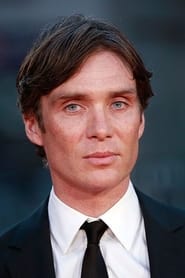 J. Robert OppenheimerCillian Murphy
Gifted, ambitious physicist who directs the Los Alamos laboratory. Charismatic but guarded, he is troubled by what his work unleashes and by his own choices.
 Kitty OppenheimerEmily Blunt
His wife, sharp and outspoken. She struggles with drink and resentment, yet fiercely defends her husband when he is attacked.
 Leslie GrovesMatt Damon
The blunt army general who oversees the Manhattan Project. He is practical and forceful, and builds an unlikely working bond with Oppenheimer.
 Lewis StraussRobert Downey Jr.
A proud, image-conscious government official and Atomic Energy Commission chairman. Wounded by perceived slights, he becomes Oppenheimer's bitter adversary.
 Jean TatlockFlorence Pugh
A troubled, politically committed woman with whom Oppenheimer has a passionate on-off relationship. Her influence lingers over his life.
How Christians are portrayed
Christians and the church barely appear. Faith is present only in passing, through Oppenheimer's quotation of Hindu scripture and a John Donne poem about God that lends the test its name. No Christian character is shown, so nothing is mocked or commended.
Community
What other Christians think
What did you notice?
Strong language (the f-word or similar)?
Is this appropriate for Christians to watch?
Thinking of children? Add the youngest age you'd show it to.
Review
Helpful reviewer
The star beside a name
Given to members whose reviews 25 or more people have marked Helpful.
It rewards reviews that help other families decide, not how many someone writes. It's a sign others have found their reviews thoughtful, not a verdict on anyone's faith.
Found a review useful? Mark it Helpful: it tells the writer, and helps others find the best reviews first.
Details
Film details
- In theatres
- Jul 21, 2023
- On streaming
- Nov 21, 2023
- Cast
- Cillian Murphy, Emily Blunt, Matt Damon, Robert Downey Jr.
- Director
- Christopher Nolan
- Studios
- Syncopy, Universal Pictures, Atlas Entertainment
- Genre
- Drama, History
- Run time
- 3h 1m
- Age rating
- US R · UK 15
How we analysed this
We gathered the plot and reception, and facts that independent sources agree on, then rated each content area against our rubric and worldview scale, using AI models calibrated on reference titles. Not yet reviewed by our team. Confidence: medium.
Score = 100 − 16 × content concern (3.45) + 8 × worldview (0) = 45
This is a guide to help families choose with wisdom, not a verdict on anyone's conscience ().
Updated 2026-10-14