




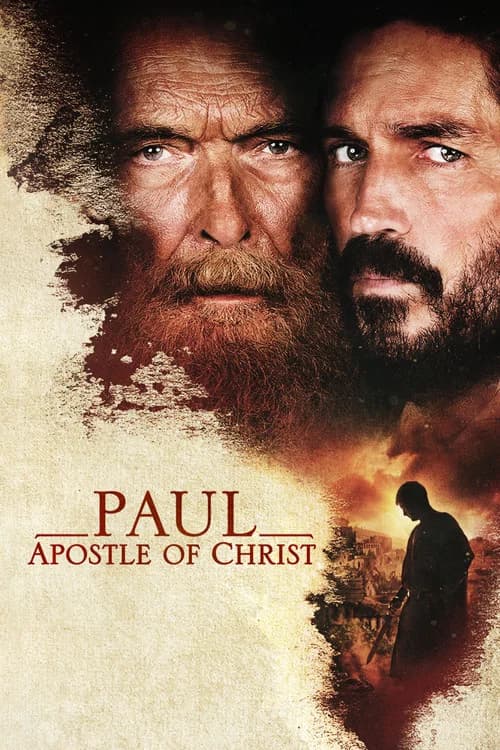
Paul, Apostle of Christ
HeartGuard score
How suitable a title is for Christian viewers, from 0 to 100. It weighs the content meters and the worldview.
- 80–100Recommended
- 60–79Watch with careThis film
- 35–59Think it through
- 15–34Strong caution
- 0–14Not recommended
HeartGuard score
How suitable a title is for Christian viewers, from 0 to 100. It weighs the content meters and the worldview.
- 80–100Recommended
- 60–79Watch with careThis film
- 35–59Think it through
- 15–34Strong caution
- 0–14Not recommended
Worldview score
What the story celebrates or condemns.
Why +2 for this film
The film explicitly affirms Christ's resurrection, grace for the worst of sinners, love of enemies and faithfulness unto death. Revenge is rebuked, and Luke's mercy to a persecutor's daughter is shown as the way of Christ.
- +2Affirms faithThis filmPresents faith in God positively and as true
- +1Positive valuesHonesty, sacrifice and family win out
- 0Mixed or neutralNo clear stance
- −1AmbivalentShows sin without judging it either way
- −2Glamorises sinMakes sin look attractive and rewarding
Age guide
How suitable this film is for each age group.
Why 13+ for this film
Christians are burned alive, a boy is beaten to death, a mother arrives covered in her murdered baby's blood and a prison raid leaves guards dead. The mood is dark and oppressive throughout.
- Under 8No
- Ages 8–12Wait
- Ages 13–15With a parent
- Ages 16–17Yes
- AdultsYes





A sober, reverent drama of Paul's last days and Luke's work in Nero's Rome, centred on grace, forgiveness and love that refuses revenge. Its persecution scenes, including Christians burned alive, make it best suited to teenagers and adults.
Watch guide
What's in it?
LanguageOne mild word
Language is clean throughout. Luke once uses a mild word for the prison while teasing Paul.
BlasphemyOne exclamation
A single shocked exclamation of God's name comes from a believer hearing of the arena deaths. All other uses of God's and Christ's names are prayer, worship and sincere testimony.
Sex and nudityBrief implied references
In a tavern scene a Roman friend jokes about the price of a woman, implying prostitution, and Mauritius declines. Dialogue also mentions orphans forced into temple prostitution and Christians being raped, but none of this is shown.
RelationshipsStrained, faithful marriages
Aquila and Priscilla are a loving, prayerful couple who disagree over whether to stay in Rome and resolve it with grace. Mauritius and his wife quarrel bitterly over their dying daughter, and she speaks of loneliness during his campaigns, but she says she stayed faithful.
ViolenceMartyrdom, burning, flogging
Christians are burned alive as human torches in the streets, Paul is flogged, a mother arrives covered in her murdered baby's blood, a boy is beaten to death and Stephen's stoning is shown in flashback. A prison raid leaves guards dead, and believers are led to their deaths in the arena, largely off screen. The violence is presented as evil persecution, never as exciting.
Frightening scenesGrim and upsetting
The mood is dark and oppressive throughout, with a dank prison, Paul's tormented nightmares and visions, grieving parents and the constant threat of execution. Younger children may find the burnings, the bloodied mother and a child's death distressing.
Drugs and alcoholTavern drinking
Mauritius meets a friend in a tavern where drink is served. Luke gives Paul a medicinal drink for pain.
AttitudesRevenge challenged
Young believers led by Cassius plot violent revenge and storm the prison, but Paul, Luke, Priscilla and Aquila firmly reject this as contrary to Christ. Paul openly confesses the lies he spread and the persecution he led as Saul. Roman cruelty is shown as evil.
OccultPagan gods, brief mention
Roman characters offer sacrifices to false gods without result, and rumours call Paul a sorcerer. Paul also speaks of the devil taunting him. All of this is framed against the gospel, and no occult practice is shown.
- To knowContent to know about
- Skip for kidsSkip for younger viewers
- DiscussWorth discussing
- 0:09
Violence
Paul, already weak and bent, is read his death sentence in the prison yard and ordered to receive further lashes.
- 0:16
Bloodied victimSkip if under 12
A grief-stricken mother comes to the settlement drenched in the blood of her husband and infant, both of whom have only just been murdered.
- 0:21
Burning aliveSkip if under 13
A mob douses a Christian man in oil and sets him alight in the street while jeering at him.
- 0:38
Sexual innuendo
In a tavern, a Roman friend jokes about the price of a woman with Mauritius, implying prostitution; Mauritius declines.
- 0:41
Grief and revenge
The boy Tarquin is brought back beaten to death, and his cousin Cassius rallies young men to strike back; Priscilla and Aquila urge peace.
- 1:10
Family conflict
Mauritius and his wife have a bitter row over their dying daughter, ending with her daring him to kill her.
- 1:12
Violence
Cassius and his followers storm the prison to free Paul, leaving guards dead; Paul refuses to go with them.
- 1:20
Martyrdom and forgiveness
Facing the arena next day, Luke leads condemned believers in forgiving their captors and praying the Lord's Prayer together.
- Late
Sad ending
The closing scenes carry a heavy, solemn loss, shown with restraint rather than graphic detail and framed with hope, though many viewers find them sad and moving.





How to play
- 1. Draw a cardOne person reads the question out loud.
- 2. Everyone answersThere are no wrong answers. Listen before you reply.
- 3. Pass it onThe next person draws, until the deck is done.



Faith & story
What does it say?
What's it about?The plot, without the ending

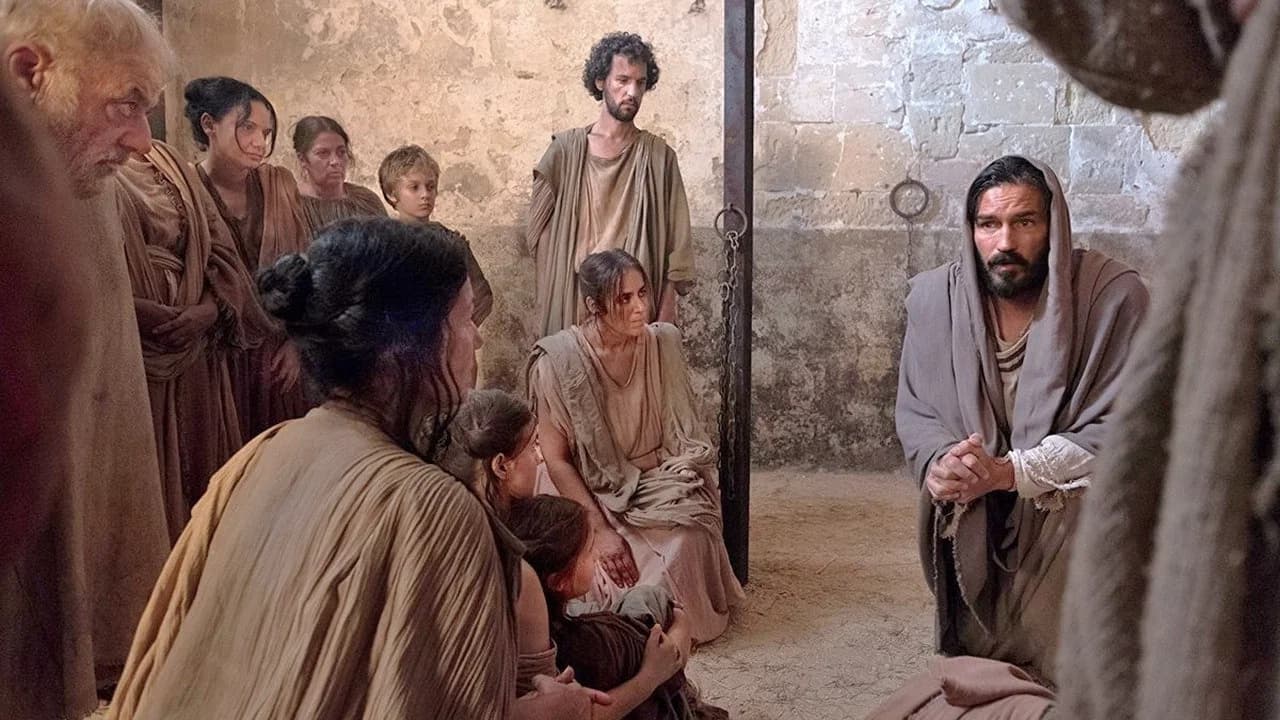
In Rome, after the great fire, Emperor Nero blames the Christians and hunts them through the streets. The apostle Paul, old and broken by years of beatings, waits in a dark cell for execution. His friend Luke, a physician, slips into the city to visit him and write down his story, while Aquila and Priscilla shelter a frightened community and must decide whether to stay or flee. The prison's new commander, Mauritius, watches Paul and Luke with suspicion while his own young daughter lies gravely ill. As Paul remembers the man he once was, a persecutor of Christians himself, he and his friends face a hard question: how should believers answer cruelty when every instinct cries out for revenge?
Through a faith lensHow it connects to the Bible

The film is built around Paul's own account of a violent zealot met and turned around by the risen Jesus on the road to Damascus. Paul's sense of himself as the worst of sinners, saved purely by mercy, runs through every scene with him, and it is this that keeps him humble when others want to make him a hero. His nightmares and his weakness are not hidden; he holds to the promise that God's grace is enough and that power is made perfect in weakness. When the young men of the community want to answer murder with murder, the film sides firmly with Paul's teaching that believers must not repay evil for evil but overcome it with good. The kind of love Paul describes in his letter to Corinth, patient, kind and enduring all things, becomes the measure by which every character is weighed. Luke's choice to heal his enemy's daughter is that teaching made flesh, an echo of Jesus' command to love enemies and pray for persecutors. The condemned believers forgive their killers as Jesus did from the cross. Paul meets the prospect of death with quiet confidence, sure that living means Christ and dying brings gain, and that in life or in death we are the Lord's own. His last letter gives the testimony of a man who has fought the good fight and kept the faith.
Fruit of the SpiritWhich fruit does it show?

9 out of 9 fruits ripe in this film
Ripe grapes are shown in the film, buds are missing
The fruit of the Spirit is everywhere in this film, shown under great pressure. Love and kindness drive Aquila and Priscilla's care for orphans, widows and refugees, and Luke's healing of his persecutor's child. Peace and self-control stand out when Paul and the community leaders refuse to take up arms despite grief and anger. Paul shows patience and faithfulness in years of suffering, and a quiet joy about what lies beyond death. Gentleness marks how he answers Mauritius's scorn. Aquila and Priscilla also show goodness in risking their own safety to shelter the hunted. The film also shows what happens when these fruits are missing, in Cassius's anger and Roman cruelty, but it clearly treats those as the wrong path.
The charactersExamples to follow or avoid






 PaulJames Faulkner
An aged, physically broken apostle awaiting execution, honest about his past as a persecutor and his present struggles, yet steady in hope and firm that love, not revenge, is Christ's way.
 LukeJim Caviezel
A physician and loyal friend who risks his life to record Paul's story. He wrestles honestly with hatred for the Romans but chooses mercy when it matters most.
 MauritiusOlivier Martinez
The hard-edged prison commander, devoted to Rome and its gods, whose desperation for his sick daughter slowly opens him to the Christians' kindness.
 PriscillaJoanne Whalley
A warm, courageous leader of the Roman believers who loves the city's poor like her own children and longs to stay and serve despite the danger.
 CassiusAlessandro Sperduti
A grieving young believer whose anger at his cousin's murder pushes him towards violent revenge, standing as a cautionary contrast to Paul's teaching.
How Christians are portrayed
Christians are portrayed warmly and with real seriousness, as a costly, caring community that feeds orphans and widows and treats the sick in a hostile city. The film is also honest about believers' flaws: leaders disagree, some members lose patience, and a group turns to violence in Christ's name, which the church firmly rejects. Faith is never mocked by the film itself, only by its Roman characters, and the apostles are shown as weary, humble people rather than polished saints.
Community
What other Christians think
What did you notice?
A sex scene, shown or clearly implied?
Is this appropriate for Christians to watch?
Thinking of children? Add the youngest age you'd show it to.
Review
Helpful reviewer
The star beside a name
Given to members whose reviews 25 or more people have marked Helpful.
It rewards reviews that help other families decide, not how many someone writes. It's a sign others have found their reviews thoughtful, not a verdict on anyone's faith.
Found a review useful? Mark it Helpful: it tells the writer, and helps others find the best reviews first.
Details
Film details
- In theatres
- Mar 23, 2018
- On streaming
- Jun 12, 2018
- Cast
- Jim Caviezel, James Faulkner, Olivier Martinez, Joanne Whalley
- Director
- Andrew Hyatt
- Studios
- Affirm Films, ODB Films, Giving Films
- Genre
- Drama, History
- Run time
- 1h 48m
- Age rating
- US PG-13 · UK 15
How we analysed this
We counted language, blasphemy and other content in the film's dialogue and read it with the plot and film details, then rated each content area against our rubric and worldview scale, using AI models calibrated on reference titles. Not yet reviewed by our team. Confidence: medium.
Score = 100 − 16 × content concern (2.77) + 8 × worldview (+2) = 72
This is a guide to help families choose with wisdom, not a verdict on anyone's conscience ().
Updated 2026-10-14