




HeartGuard score
How suitable a title is for Christian viewers, from 0 to 100. It weighs the content meters and the worldview.
- 80–100RecommendedThis episode
- 60–79Watch with care
- 35–59Think it through
- 15–34Strong caution
- 0–14Not recommended
HeartGuard score
How suitable a title is for Christian viewers, from 0 to 100. It weighs the content meters and the worldview.
- 80–100RecommendedThis episode
- 60–79Watch with care
- 35–59Think it through
- 15–34Strong caution
- 0–14Not recommended
Worldview score
What the story celebrates or condemns.
Why +2 for this episode
The episode centres on Jesus' teaching about new birth and God's saving love, drawn directly from John 3, and shows a religious leader and an outcast both drawn towards him.
- +2Affirms faithThis episodePresents faith in God positively and as true
- +1Positive valuesHonesty, sacrifice and family win out
- 0Mixed or neutralNo clear stance
- −1AmbivalentShows sin without judging it either way
- −2Glamorises sinMakes sin look attractive and rewarding
Age guide
How suitable this episode is for each age group.
Why 8+ for this episode
Tension is mild: veiled menace from Roman officials. The talk of being born again and Matthew's painful family estrangement is easier to follow with some maturity.
- Under 8With a parent
- Ages 8–12Yes
- Ages 13–15Yes
- Ages 16–17Yes
- AdultsYes





A gentle, reverent episode built around Jesus' night-time conversation with Nicodemus and his call to an outcast tax collector. Clean, thoughtful and well suited to family viewing.
Watch guide
What's in it?
LanguageNone
The dialogue contains no swearing or crude language.
BlasphemyNone
God's name is used only in sincere speech, scripture and worship, above all in the night conversation between Jesus and Nicodemus.
Sex and nudityNone
There is no sexual content or nudity in this episode.
RelationshipsNone
No romantic storylines feature. Matthew's strained relationship with his mother is a family matter, not a romantic one.
ViolenceMild tension
There is no real violence. Roman officials question Nicodemus with an undercurrent of menace, and the guard Gaius is a looming presence.
Frightening scenesMild, wilderness snakes
The opening, set in the time of Moses, refers to the plague of serpents in the desert, which may unsettle very young children. It is brief and not graphic.
Drugs and alcoholNone
No drinking or drug use features in this episode.
AttitudesMild, challenged
Matthew is a tax collector despised by his people and estranged from his family. His mother's coldness towards him is shown as painful, not admirable.
OccultNone
There is no witchcraft, fortune-telling or false spirituality. The bronze serpent in the opening scene is part of the biblical account and is shown as God's provision, not as magic.
- To knowContent to know about
- DiscussWorth discussing
- Early
Mild fright
A prologue in the desert shows Moses making a bronze serpent while Joshua looks on puzzled; the serpents are referred to rather than shown in detail.
- Early
Veiled threat
Gaius escorts Matthew, and a Roman praetor questions Nicodemus about the miracle worker with an undercurrent of menace.
- Mid
Family estrangement
Matthew visits his mother hoping for answers and meets coldness, a painful family moment.
- Mid
Faith and teaching
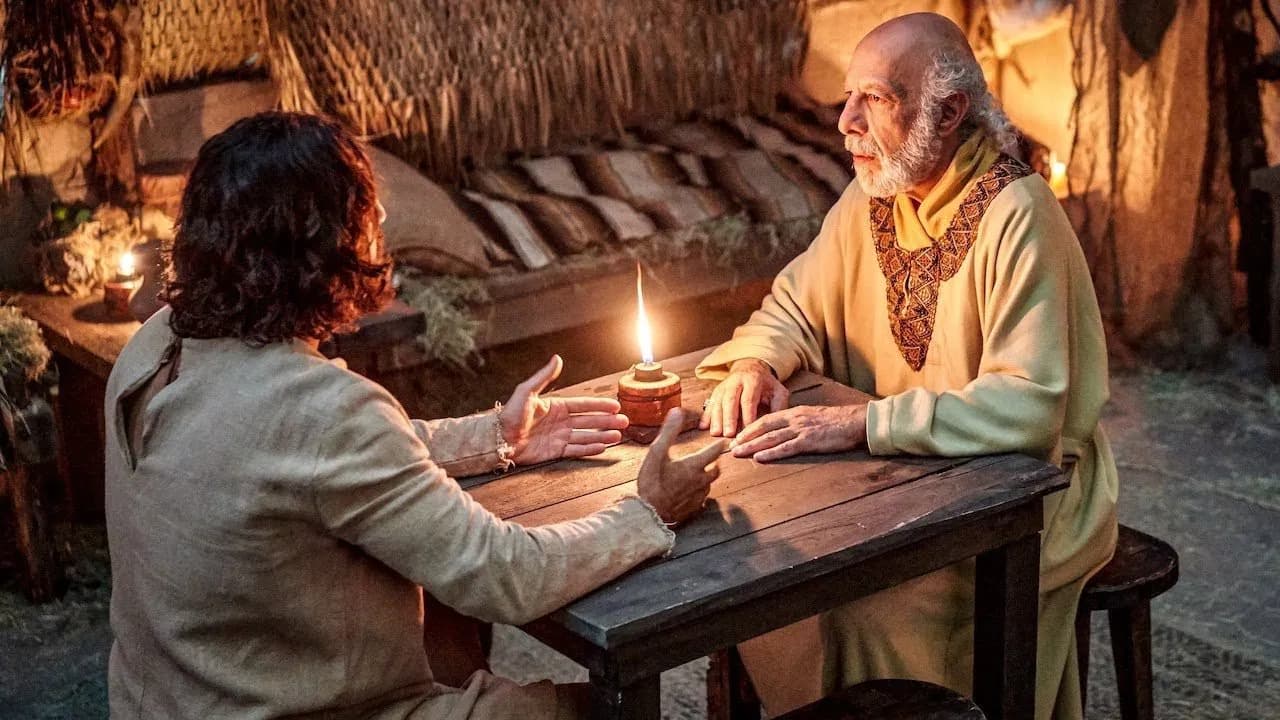
Jesus and Nicodemus talk by night about being born again, the Son of Man and God's love for the world, with Moses and the bronze serpent as the picture.
- Late
Calling and response
Jesus passes Matthew's booth and invites him to follow, and Matthew responds at once.



How to play
- 1. Draw a cardOne person reads the question out loud.
- 2. Everyone answersThere are no wrong answers. Listen before you reply.
- 3. Pass it onThe next person draws, until the deck is done.



Faith & story
What does it say?
What's it about?The plot, without the ending

In Capernaum, Matthew the tax collector is unsettled by the miracles he has seen and by his own place in a divided town. Roman officials press the Pharisee Nicodemus for news of the teacher drawing crowds. Nicodemus asks to speak with Jesus privately, and an opening scene in the desert in the time of Moses sets the theme.
Through a faith lensHow it connects to the Bible

This episode follows the night conversation in John 3, where Nicodemus, a respected teacher of the law, comes to Jesus in the dark with questions he cannot ask in public. Jesus tells him that no one can see the kingdom of God unless born again. The bronze serpent Moses lifted up in the wilderness points to the Son of Man being lifted up, so that whoever believes may have life. God's motive is love for the world, and the Son came to save it rather than condemn it. Matthew's story runs alongside as a counterpart. A man shut out by his own people, who cannot explain what he has seen, is simply invited to follow, as Levi was by the tax booth. Nicodemus later defends Jesus in the council and helps bury him, which shows that honest questions asked in the dark can grow into open faith. The episode leaves the viewer with an invitation rather than a demand.
Fruit of the SpiritWhich fruit does it show?

6 out of 9 fruits ripe in this episode
Ripe grapes are shown in the episode, buds are missing
- Joy
- Goodness
- Self-control
Jesus shows love when he tells Nicodemus how much God cares for the world, and when he personally calls Matthew to follow him. Patience and gentleness mark how Jesus answers a night-time visitor who is wary and full of questions. Kindness appears when he welcomes him without rebuke, and peace in the calm of that quiet meeting. Faithfulness is seen in John, who stays close and carefully writes down the conversation. Matthew's mother's coldness is a hard moment that the episode treats as sad.
The charactersExamples to follow or avoid





 Jesus of NazarethJonathan Roumie
Teacher who welcomes a curious Pharisee at night and speaks plainly about new birth and God's love. He also extends an open invitation to those who follow him.
 NicodemusErick Avari
A respected Pharisee and teacher of the law, drawn by what he has heard. He is pressed by Roman officials but seeks Jesus out in private.
 MatthewParas Patel
A tax collector, scorned by his people and distanced from his family. He is trying to make sense of the miracles he has witnessed.
 GaiusKirk B.R. Woller
A Roman guard who escorts Matthew and acts as an authority figure in Capernaum. He is a looming presence rather than a violent one.
How Christians are portrayed
Faith is shown with warmth and seriousness. Jesus is wise and approachable, and his followers are ordinary people still learning. Nicodemus, a religious leader, is shown as a sincere seeker rather than a villain, which gives the portrayal some nuance.
Community
What other Christians think
What did you notice?
Strong language (the f-word or similar)?
Is this appropriate for Christians to watch?
Thinking of children? Add the youngest age you'd show it to.
Review
Helpful reviewer
The star beside a name
Given to members whose reviews 25 or more people have marked Helpful.
It rewards reviews that help other families decide, not how many someone writes. It's a sign others have found their reviews thoughtful, not a verdict on anyone's faith.
Found a review useful? Mark it Helpful: it tells the writer, and helps others find the best reviews first.
Details
Episode details
- Cast
- Erick Avari, Jonathan Roumie, Shahar Isaac, Elizabeth Tabish
- First aired
- Nov 26, 2019
- Created by
- Dallas Jenkins
- Networks
- Prime Video, VidAngel, Angel
- Genre
- Action & Adventure, Family, Drama
- Episode length
- 36m
- Age rating
- US TV-PG · UK 12
How we analysed this
We gathered the episode's summary, its reception and facts about the series that independent sources agree on, then rated each content area against our rubric and worldview scale, using AI models calibrated on reference titles. Not yet reviewed by our team. Confidence: medium.
Score = 100 − 16 × content concern (0.60) + 8 × worldview (+2) = 100
This is a guide to help families choose with wisdom, not a verdict on anyone's conscience ().
Updated 2026-10-14