





HeartGuard score
How suitable a title is for Christian viewers, from 0 to 100. It weighs the content meters and the worldview.
- 80–100RecommendedThis episode
- 60–79Watch with care
- 35–59Think it through
- 15–34Strong caution
- 0–14Not recommended
HeartGuard score
How suitable a title is for Christian viewers, from 0 to 100. It weighs the content meters and the worldview.
- 80–100RecommendedThis episode
- 60–79Watch with care
- 35–59Think it through
- 15–34Strong caution
- 0–14Not recommended
Worldview score
What the story celebrates or condemns.
Why +2 for this episode
The episode presents Jesus as Lord, zealous for honest worship and open to Gentiles, while exposing corruption and self-interest among the powerful.
- +2Affirms faithThis episodePresents faith in God positively and as true
- +1Positive valuesHonesty, sacrifice and family win out
- 0Mixed or neutralNo clear stance
- −1AmbivalentShows sin without judging it either way
- −2Glamorises sinMakes sin look attractive and rewarding
Age guide
How suitable this episode is for each age group.
Why 10+ for this episode
The Temple clearing is forceful, with a whip and overturned tables but no blood, and there is raw family grief and leaders plotting against Jesus.
- Under 8With a parent
- Ages 8–12Yes
- Ages 13–15Yes
- Ages 16–17Yes
- AdultsYes





A gripping Holy Week episode in which Jesus clears the Temple of exploiters while leaders plot against him. Largely gentle in content, with one forceful confrontation and heavy grief.
Watch guide
What's in it?
LanguageNone
The series has no swearing, and nothing suggests this episode differs.
BlasphemyNone
God's name is used in prayer, teaching and sincere speech only.
Sex and nudityNone
No sexual content. A flashback shows Ramah's parents preparing her for betrothal to Thomas.
RelationshipsBetrothal, grief
A flashback shows Ramah being prepared for betrothal. Her grieving parents disagree over her choice to follow Jesus.
ViolenceTemple clearing
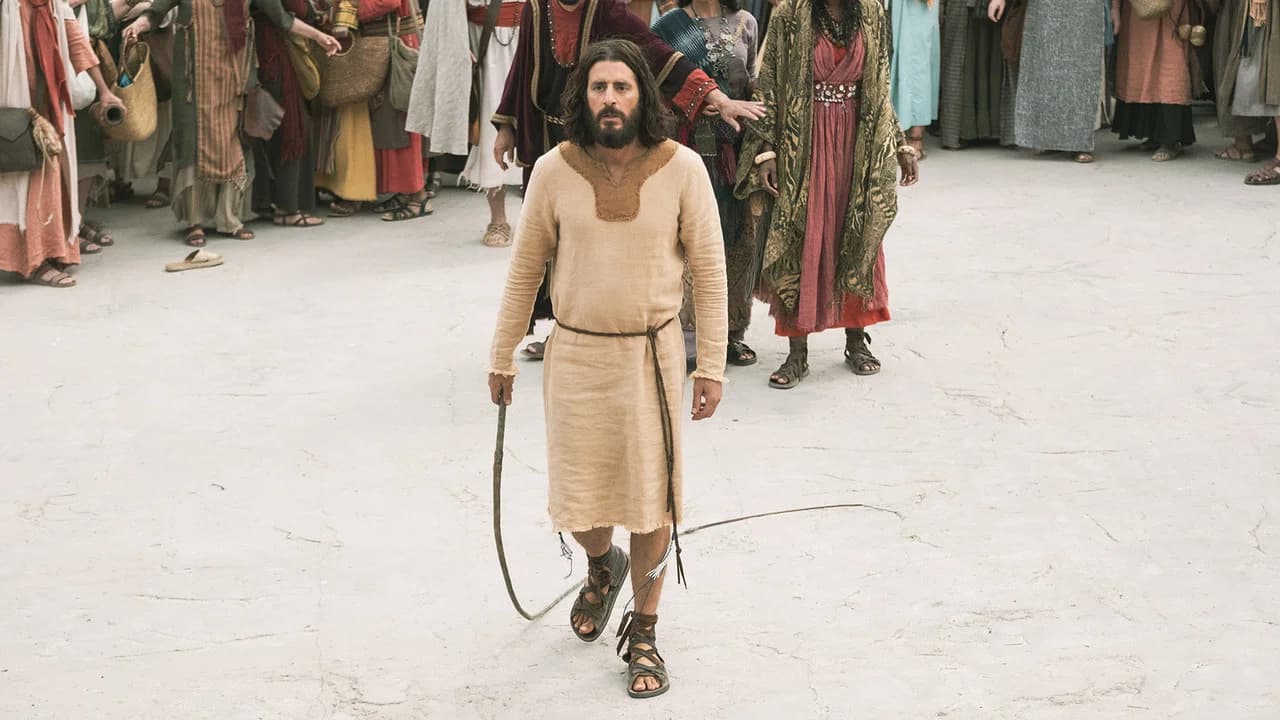
Wielding a whip, Jesus chases merchants and money changers away and knocks over their tables. It is forceful but not bloody.
Frightening scenesTense plotting
Religious and political leaders plot against Jesus, and there is raw grief over Ramah's death. Some younger children may find the anger in the Temple scene unsettling.
Drugs and alcoholPassover wine
Wine appears at the Last Supper in a religious meal setting.
AttitudesGreed and scheming
Temple traders exploit Gentile pilgrims with unfair rates, and Caiaphas and Herod scheme to protect their power. Both are clearly shown as wrong.
OccultNone
There is no witchcraft, fortune-telling, séances or other occult content. The episode is a Gospel drama about Jesus in Jerusalem, his clearing of the Temple and the leaders' plotting.
- To knowContent to know about
- DiscussWorth discussing
- Early
Faith and failure
During the Last Supper, Jesus urges his disciples to prepare themselves for a world set against them, and cautions Peter that he will disown him thrice. Wine is part of the Passover meal.
- Early
Grief and family conflict
Ramah's grieving father blames Thomas and Jesus for her death, while her mother defends her daughter's choice. A flashback shows her parents preparing her for betrothal.
- Mid
Greed and exploitation
Money changers and merchants charge Gentile believers unfair rates and fees for their Passover offerings.
- Mid
Plot to kill
Caiaphas and Herod Antipas discuss how to remove Jesus so they can protect their own interests.
- Late
Forceful confrontation
Furious at the exploitation, Jesus uses a whip to force merchants and money changers out of the Temple square, and tips over their tables. Judas thinks he has gone mad. The anger may unsettle younger children.



How to play
- 1. Draw a cardOne person reads the question out loud.
- 2. Everyone answersThere are no wrong answers. Listen before you reply.
- 3. Pass it onThe next person draws, until the deck is done.



Faith & story
What does it say?
What's it about?The plot, without the ending

In the days before Passover, Jesus and his followers arrive in Jerusalem. Peter gets advice about preaching, and Gentile pilgrims come to make their offerings. Religious and political leaders plan how to be rid of Jesus. A family still mourns a daughter who followed him, and the Temple marketplace stirs strong feeling.
Through a faith lensHow it connects to the Bible

This episode shows Jesus acting out of zeal for His Father's house. Traders exploit Gentile pilgrims who have travelled to worship, and Jesus drives them out. His anger is directed at injustice, not at the vulnerable, and it echoes the prophets' insistence that the Temple should be open to all nations. The scheming of Caiaphas and Herod mirrors the leaders who feared losing their place and began planning to destroy Jesus. Their plotting is shown as self-protection dressed up as concern for the nation. Ramah's father grieves and blames Jesus, much as Martha and Mary spoke honestly to Him in their sorrow. The Last Supper framing recalls Jesus warning Peter of his coming denial, and pointing His friends beyond the cross to meeting again in Galilee. Wrongdoing is named and has consequences, while hope is held out beyond them. The episode invites viewers to ask whether worship in their own lives is sincere or has become a transaction.
Fruit of the SpiritWhich fruit does it show?

5 out of 9 fruits ripe in this episode
Ripe grapes are shown in the episode, buds are missing
- Joy
- Peace
- Self-control
Love and goodness show in Jesus, who defends Gentile worshippers from exploitation, and in Andrew and Philip, who kindly welcome Tamar and Leander. Gentleness shows in Andrew's patient advice to Peter, and faithfulness in Ramah's mother, who stands by her daughter's choice to follow Jesus. Strife, envy and divisions mark Caiaphas and Herod as they scheme to keep their power, and the traders' greed exploits the pilgrims. Ramah's father shows fits of anger as he blames Thomas and Jesus in his grief. Jesus' own anger in the Temple is righteous zeal rather than a loss of control, but the leaders' rage in response is self-serving. Judas, jealous of his own standing and doubting Jesus, thinks Him mad.
The charactersExamples to follow or avoid






 Jonathan Roumie as Jesus of NazarethJonathan Roumie
Teaches his disciples, warns of what is coming, and shows zeal for true worship and for those excluded from it.
 Shahar Isaac as Simon PeterShahar Isaac
Impulsive disciple, given a warning about his own weakness and advice about preaching.
 Noah James as AndrewNoah James
Peter's brother, who guides him and welcomes Gentile believers in Jerusalem.
 Joey Vahedi as ThomasJoey Vahedi
A disciple blamed by Ramah's father for her death, carrying the weight of that grief.
 Richard Fancy as CaiaphasRichard Fancy
The High Priest, who schemes with Herod to protect his position by removing Jesus.
How Christians are portrayed
Jesus and His followers are portrayed warmly and with dignity, as people who are caring, imperfect and learning. Peter is shown as sincere but fallible, and the disciples as welcoming to outsiders. The religious establishment appears as corrupt and self-protecting, while the grieving father shows that doubt and anger are treated honestly rather than mocked.
Community
What other Christians think
What did you notice?
Strong language (the f-word or similar)?
Is this appropriate for Christians to watch?
Thinking of children? Add the youngest age you'd show it to.
Review
Helpful reviewer
The star beside a name
Given to members whose reviews 25 or more people have marked Helpful.
It rewards reviews that help other families decide, not how many someone writes. It's a sign others have found their reviews thoughtful, not a verdict on anyone's faith.
Found a review useful? Mark it Helpful: it tells the writer, and helps others find the best reviews first.
Details
Episode details
- Cast
- Erick Avari, Jonathan Roumie, Shahar Isaac, Elizabeth Tabish
- First aired
- Jun 15, 2025
- Created by
- Dallas Jenkins
- Networks
- Prime Video, VidAngel, Angel
- Genre
- Action & Adventure, Family, Drama
- Episode length
- 51m
- Age rating
- US TV-PG · UK 12
How we analysed this
We gathered the episode's summary, its reception and facts about the series that independent sources agree on, then rated each content area against our rubric and worldview scale, using AI models calibrated on reference titles. Not yet reviewed by our team. Confidence: medium.
Score = 100 − 16 × content concern (1.30) + 8 × worldview (+2) = 95
This is a guide to help families choose with wisdom, not a verdict on anyone's conscience ().
Updated 2026-10-14