






HeartGuard score
How suitable a title is for Christian viewers, from 0 to 100. It weighs the content meters and the worldview.
- 80–100RecommendedThis episode
- 60–79Watch with care
- 35–59Think it through
- 15–34Strong caution
- 0–14Not recommended
HeartGuard score
How suitable a title is for Christian viewers, from 0 to 100. It weighs the content meters and the worldview.
- 80–100RecommendedThis episode
- 60–79Watch with care
- 35–59Think it through
- 15–34Strong caution
- 0–14Not recommended
Worldview score
What the story celebrates or condemns.
Why +2 for this episode
The episode presents Jesus's teaching and authority sincerely and affirms faith in him, while exposing religious hypocrisy.
- +2Affirms faithThis episodePresents faith in God positively and as true
- +1Positive valuesHonesty, sacrifice and family win out
- 0Mixed or neutralNo clear stance
- −1AmbivalentShows sin without judging it either way
- −2Glamorises sinMakes sin look attractive and rewarding
Age guide
How suitable this episode is for each age group.
Why 8+ for this episode
There is no swearing, sexual content or on-screen violence, but the plot against Jesus, warnings of persecution and his coming death, and a parable about murder create a tense, foreboding mood.
- Under 8With a parent
- Ages 8–12Yes
- Ages 13–15Yes
- Ages 16–17Yes
- AdultsYes





A thoughtful, tense episode of Jesus's final teaching in Jerusalem as the authorities close in. Gentle content, though the foreboding mood suits children who know the Easter story.
Watch guide
What's in it?
LanguageNo swearing
The series has no swearing and nothing in this episode suggests otherwise.
BlasphemyNone
God is spoken of in teaching, prayer and debate, always sincerely.
Sex and nudityNone
No sexual content in this episode.
RelationshipsNone
The focus is on Jesus, his disciples and the religious leaders, not romance.
ViolenceThreats, aftermath
The episode follows the overturning of the Temple tables and includes talk of the Temple's destruction, coming persecution and Jesus's death, without violence shown on screen.
Frightening scenesTense, foreboding
Plotting against Jesus and his warnings of suffering and persecution create a heavy, tense mood that may unsettle younger children.
Drugs and alcoholPassover meal
Wine forms part of the Last Supper, shown as part of a sacred meal.
AttitudesPlotting, hypocrisy
Caiaphas and Shmuel scheme with Pilate's knowledge to trap Jesus; their hypocrisy is exposed and rebuked.
OccultNone
There is no occult content. The episode is Gospel teaching, including Jesus speaking of the Holy Spirit, which is worship and faith rather than the occult.
- To knowContent to know about
- DiscussWorth discussing
- Early
Spiritual teaching
During the Last Supper, Jesus speaks to his disciples of the Holy Spirit and alludes to the trial and death awaiting him; they respond with bewilderment and anxiety.
- Early
Confrontation
Jesus warns the religious leaders that the Temple will be destroyed, and the disciples argue over his angry cleansing of the Temple marketplace.
- Mid
Plotting against Jesus
Caiaphas and Shmuel meet Pilate, then plan to trap Jesus into saying something they can use against him.
- Mid
Authority and hypocrisy
The leaders interrupt Jesus' teaching and challenge his authority; he answers with a question about John the Baptist.
- Late
Parable of violence
Jesus relates the Parable of the Tenants, in which a landowner's servants and then his son are murdered, directing the story at the religious leaders.
- Late
Foreboding, persecution
On the Mount of Olives Jesus warns a small group of disciples about coming persecution, in a sombre and foreboding scene.



How to play
- 1. Draw a cardOne person reads the question out loud.
- 2. Everyone answersThere are no wrong answers. Listen before you reply.
- 3. Pass it onThe next person draws, until the deck is done.



Faith & story
What does it say?
What's it about?The plot, without the ending

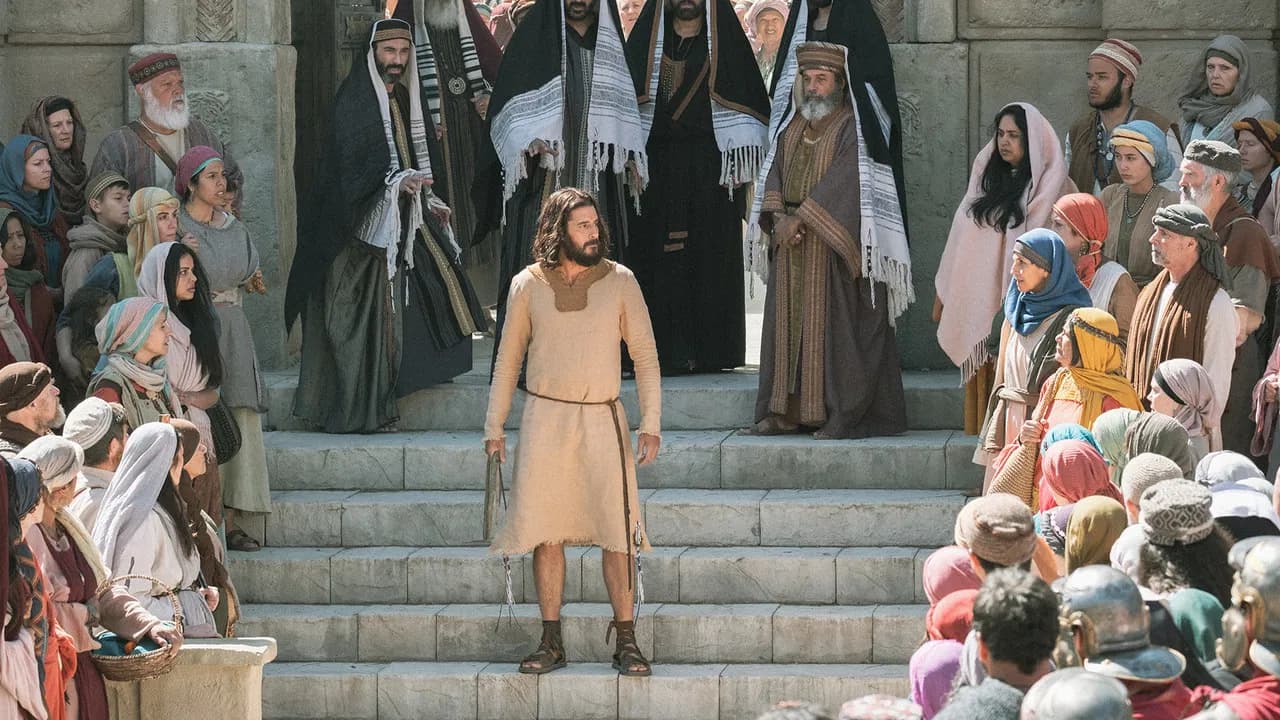
It is Passover week in Jerusalem. Jesus teaches the vast crowds for the last time while the religious leaders look for a way to trap him with his own words. His disciples struggle to understand his warnings about what lies ahead.
Through a faith lensHow it connects to the Bible

This episode sets Jesus's authority against the scheming of leaders who guard their own standing. When they demand to know where his authority comes from, he answers with a question about John the Baptist and exposes their fear of the crowd. His Parable of the Tenants, about servants and a son rejected by those entrusted with a vineyard, mirrors the long history of Israel's prophets being refused. His warnings of woe for hypocrisy echo his words to the scribes and Pharisees, who looked clean outside but neglected justice, mercy and faithfulness. His sorrow over Jerusalem and the Temple shows judgement held alongside grief, not coldness. In the upper room he promises the Holy Spirit as Helper to friends who do not yet understand what is coming. He also tells them plainly that following him will cost them. The episode invites viewers to ask where they trust religious position over humble obedience, and it offers comfort that Christ goes ahead of his people into suffering.
Fruit of the SpiritWhich fruit does it show?

6 out of 9 fruits ripe in this episode
Ripe grapes are shown in the episode, buds are missing
- Joy
- Kindness
Love shows in Jesus preparing his friends for what lies ahead and promising the Spirit to them. Peace is in his calm when the leaders try to trap him, and Patience and Gentleness in how he answers their challenges and speaks to his bewildered disciples. Goodness appears in his truthful rebuke of corruption at the Temple. Faithfulness is seen in his resolve to the Father's will, and in the disciples who stay with him despite their confusion. Against this, Caiaphas and Shmuel show Hatred, Envy and Jealousy of Jesus's influence, and Strife as they plot to catch him out in his words. Self-control is tested most in the leaders' scheming, which is driven by fear for their position.
The charactersExamples to follow or avoid





 Jonathan Roumie as Jesus of NazarethJonathan Roumie
Teaches openly and calmly, answers his challengers with questions of his own, and prepares his friends for the suffering to come.
 Shahar Isaac as Simon PeterShahar Isaac
One of the closest disciples, loyal but confused by Jesus' warnings, and among those Jesus takes aside to prepare.
 Elizabeth Tabish as Mary MagdaleneElizabeth Tabish
A devoted follower who leaves to find help as tensions in Jerusalem rise.
 Richard Fancy as CaiaphasRichard Fancy
The high priest, who works with Shmuel to catch Jesus out and protect his own position.
How Christians are portrayed
Faith is treated with reverence: Jesus is the centre and his teaching is taken from the Gospels. The disciples are sincere but confused and fearful, which is honest rather than idealised. The religious establishment serves as the foil, with its hypocrisy and political calculation exposed.
Community
What other Christians think
What did you notice?
Strong language (the f-word or similar)?
Is this appropriate for Christians to watch?
Thinking of children? Add the youngest age you'd show it to.
Review
Helpful reviewer
The star beside a name
Given to members whose reviews 25 or more people have marked Helpful.
It rewards reviews that help other families decide, not how many someone writes. It's a sign others have found their reviews thoughtful, not a verdict on anyone's faith.
Found a review useful? Mark it Helpful: it tells the writer, and helps others find the best reviews first.
Details
Episode details
- Cast
- Erick Avari, Jonathan Roumie, Shahar Isaac, Elizabeth Tabish
- First aired
- Jun 22, 2025
- Created by
- Dallas Jenkins
- Networks
- Prime Video, VidAngel, Angel
- Genre
- Action & Adventure, Family, Drama
- Episode length
- 59m
- Age rating
- US TV-PG · UK 12
How we analysed this
We gathered the episode's summary, its reception and facts about the series that independent sources agree on, then rated each content area against our rubric and worldview scale, using AI models calibrated on reference titles. Not yet reviewed by our team. Confidence: medium.
Score = 100 − 16 × content concern (1.21) + 8 × worldview (+2) = 97
This is a guide to help families choose with wisdom, not a verdict on anyone's conscience ().
Updated 2026-10-14