







HeartGuard score
How suitable a title is for Christian viewers, from 0 to 100. It weighs the content meters and the worldview.
- 80–100RecommendedThis episode
- 60–79Watch with care
- 35–59Think it through
- 15–34Strong caution
- 0–14Not recommended
HeartGuard score
How suitable a title is for Christian viewers, from 0 to 100. It weighs the content meters and the worldview.
- 80–100RecommendedThis episode
- 60–79Watch with care
- 35–59Think it through
- 15–34Strong caution
- 0–14Not recommended
Worldview score
What the story celebrates or condemns.
Why +2 for this episode
The episode centres on Jesus during his final week, honouring faith, forgiveness and devotion while showing betrayal and scheming as wrong.
- +2Affirms faithThis episodePresents faith in God positively and as true
- +1Positive valuesHonesty, sacrifice and family win out
- 0Mixed or neutralNo clear stance
- −1AmbivalentShows sin without judging it either way
- −2Glamorises sinMakes sin look attractive and rewarding
Age guide
How suitable this episode is for each age group.
Why 8+ for this episode
There is no swearing or sexual content, and the violence is limited to a plot to arrest Jesus. Tension around Judas's growing anger and betrayal may unsettle younger children.
- Under 8With a parent
- Ages 8–12Yes
- Ages 13–15Yes
- Ages 16–17Yes
- AdultsYes





A quiet, tense episode of Passion Week as the authorities plot and Judas wavers, with no language or sexual content. Suitable for most families.
Watch guide
What's in it?
LanguageNo swearing
The dialogue contains no profanity.
BlasphemyNone
God is spoken of in prayer, teaching and sincere conversation only.
Sex and nudityNone
No sexual content in this episode.
RelationshipsFriendship and loyalty
The focus is on Jesus with his disciples and female followers; there is no romance.
ViolenceThreat of arrest
Religious leaders plan to arrest Jesus quietly at night. Tension builds but little or no violence is shown.
Frightening scenesMild tension
Plotting and Judas's growing anger create a sense of foreboding that younger children may find unsettling.
Drugs and alcoholPassover wine
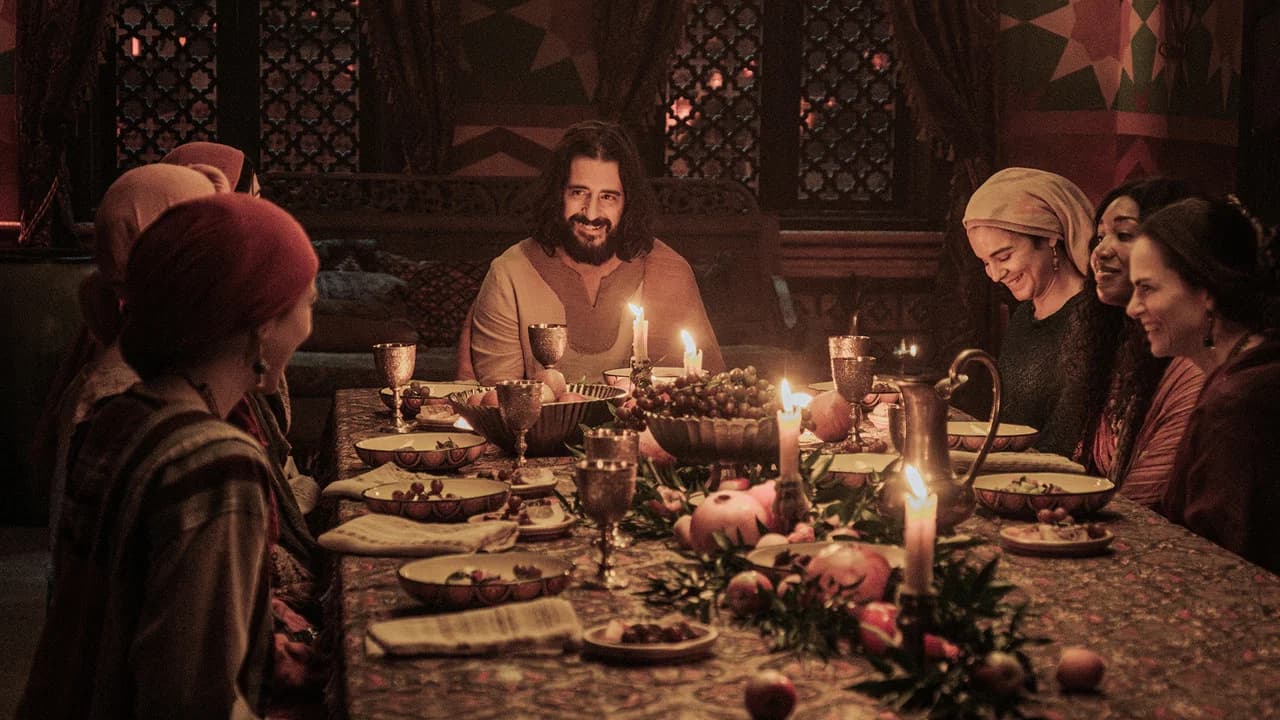
Wine is shared at a meal in a religious, communal setting.
AttitudesBetrayal plotted
Judas grows bitter that Jesus will not lead an uprising and drifts towards betraying him, while the authorities plot to keep the crowds from turning restless. The story frames this as a grave wrong.
OccultNone
There is no witchcraft, fortune-telling, spiritism or false spirituality. The faith shown is Jesus and his followers observing Jewish customs and Passover, which is not occult content.
- To knowContent to know about
- DiscussWorth discussing
- Early
Plotting against Jesus
The religious authorities gather and decide to seize Jesus discreetly after dark so the people do not riot, although one among them feels more kindly towards him than the rest.
- Early
Alcohol (ceremonial)
Jesus and his disciples share the Passover meal, with wine taken as part of the shared ceremonial supper.
- Mid
Betrayal and anger
Judas argues with Jesus, angry that he will not lead a rebellion against Rome, and moves towards betraying him.
- Mid
Forgiveness
Jesus spends one-to-one time with John, who lets go of his unforgiveness.
- Late
Teaching and symbolism
While travelling, Jesus pronounces a curse on a fig tree that has produced nothing, a baffling scene for children.
- Late
Gratitude and worship
At Martha and Lazarus' home, Jesus shares a quiet Dayenu celebration with his female followers.




How to play
- 1. Draw a cardOne person reads the question out loud.
- 2. Everyone answersThere are no wrong answers. Listen before you reply.
- 3. Pass it onThe next person draws, until the deck is done.



Faith & story
What does it say?
What's it about?The plot, without the ending

In the final week before the crucifixion, the religious leaders, fearing a public outcry, decide to arrest Jesus quietly at night. Yet no one knows where to find him. Jesus spends time with his closest followers and travels with them towards Bethany, while one disciple's frustration grows.
Through a faith lensHow it connects to the Bible

This episode sits in the final days before the cross, where the Gospels show religious leaders deciding Jesus must be seized away from the crowds. Judas's disappointment mirrors the wish for a Messiah who would overthrow Rome rather than serve and suffer, and his turn towards betrayal shows how a heart set on its own expectations can harden against the person standing in front of it. The fig tree without fruit recalls Jesus' warning that outward show without fruit is empty. John's struggle to let go of resentment echoes the call to forgive as the Lord forgave. The scheming leaders pursue order by crooked means, while Jesus shares a meal with his friends, serving them and knowing what is coming. The episode points to a Saviour who goes to his suffering willingly, and it leaves room for talk about forgiveness and about what we do when God does not act as we expect.
Fruit of the SpiritWhich fruit does it show?

6 out of 9 fruits ripe in this episode
Ripe grapes are shown in the episode, buds are missing
- Joy
- Goodness
- Self-control
Love and gentleness show in Jesus, who spends time one to one with his disciples and shares a meal with them, knowing what lies ahead. Patience and peace appear in the way he answers Judas calmly and keeps going. His gentleness appears in how he looks after the women who follow him, among them Mary Magdalene, Martha and Joanna, as they hold their evening ritual, a kindness that shows in his care for them. Faithfulness is seen in John, who lets go of unforgiveness and stays close to Jesus. Hatred and strife appear in the leaders' plotting against Jesus, with Shmuel viewing him as a threat. Divisions show in the council, where Yussif is more sympathetic than Shmuel. Jealousy and bitterness drive Judas, who resents that Jesus will not lead a rebellion.
The charactersExamples to follow or avoid





 Jesus of NazarethJonathan Roumie
Teaches, forgives and prepares his followers for what is coming, giving each personal time and attention while knowing what lies ahead.
 JohnGeorge H. Xanthis
One of the closest disciples. He is shown wrestling with unforgiveness and being gently led to let it go.
 Mary MagdaleneElizabeth Tabish
A devoted follower who shares in the quiet gathering of the women with Jesus, grateful for how her life has changed.
 NicodemusErick Avari
A Pharisee and member of the council who has sympathy for Jesus and is caught between the leaders' plans and his conscience.
How Christians are portrayed
Faith is shown reverently and warmly, with Jesus and his followers as sincere, flawed people trying to follow him. Judas and the religious leaders serve as foils whose motives are political rather than spiritual, though a more sympathetic voice among the leaders adds nuance. The series adds invented dialogue and detail beyond the Gospels.
Community
What other Christians think
What did you notice?
Strong language (the f-word or similar)?
Is this appropriate for Christians to watch?
Thinking of children? Add the youngest age you'd show it to.
Review
Helpful reviewer
The star beside a name
Given to members whose reviews 25 or more people have marked Helpful.
It rewards reviews that help other families decide, not how many someone writes. It's a sign others have found their reviews thoughtful, not a verdict on anyone's faith.
Found a review useful? Mark it Helpful: it tells the writer, and helps others find the best reviews first.
Details
Episode details
- Cast
- Erick Avari, Jonathan Roumie, Shahar Isaac, Elizabeth Tabish
- First aired
- Jun 22, 2025
- Created by
- Dallas Jenkins
- Networks
- Prime Video, VidAngel, Angel
- Genre
- Action & Adventure, Family, Drama
- Episode length
- 55m
- Age rating
- US TV-PG · UK 12
How we analysed this
We gathered the episode's summary, its reception and facts about the series that independent sources agree on, then rated each content area against our rubric and worldview scale, using AI models calibrated on reference titles. Not yet reviewed by our team. Confidence: medium.
Score = 100 − 16 × content concern (1.16) + 8 × worldview (+2) = 97
This is a guide to help families choose with wisdom, not a verdict on anyone's conscience ().
Updated 2026-10-14